
Hardscaping is the perfect way to transform your yard into a true extension of your home. However, many homeowners can’t quite define hardscaping and what it entails. So what is hardscaping exactly? Take a closer look at this often misunderstood aspect of exterior design to help you achieve a stunning yard.
What Is Hardscaping?
Perhaps the most straightforward hardscaping definition is that it refers to permanent, non-living yard features. That can include everything from patios and walkways to fire pits and outdoor kitchens. These elements focus on both form and function, offering style and while also supporting your daily activities.
Hardscaping provides a more permanent solution than plants and other exterior design elements. Your hardscape stays consistent year-round and stands the test of time. That’s why the right hardscaping project can make an excellent long-term investment for your property.
Hardscaping vs. Landscaping
What is hardscape landscaping, then? While many people use hardscaping and landscaping interchangeably, that isn’t really accurate. Understanding the differences and synergy between the two is vital to achieving the best results.
Hardscaping can provide the framework for your yard. From there, landscaping adds a splash of life and color.
Hardscapes feature stone, brick, and concrete to build long-lasting surfaces and structures. Landscaping, on the other hand, introduces grass, shrubs, and flowers to soften the scene. In general, landscaping requires much more maintenance than hardscaping.
When planning your yard design, hardscaping comes first. It establishes key details such as grades and drainage. Landscaping can then fill in the space afterward. Together, they provide a yard that is stable, functional, and beautiful.
The Benefits of Hardscaping for Your Property
You may wonder, what is hardscaping good for in terms of benefits for your property? First, it elevates both curb appeal and market value. Your property will look polished and well planned. Features like patios or fireplaces improve both visual impact and function, which enhances the value of your outdoor spaces.
The right hardscape design also improves safety and usability. Even surfaces prevent tripping, and you can take advantage of built-in lighting for visibility. Retaining walls can reshape your yard by holding back soil on slopes and protecting lawns and gardens.
Additionally, hardscape reduces maintenance requirements, as these elements are easier to take care of than lawns and plant beds. That means less mowing, watering, and weeding. You’ll save time and money while also achieving a more sustainable exterior design overall.
Many homeowners have discovered these benefits and adopted hardscaping for their yards. In fact, the U.S. market for hardscaping products has risen dramatically over the past decade. The industry sat at about $2.7 billion in 2015, growing to nearly $4.5 billion in 2023.
Common Types of Hardscape
There are many different hardscaping examples covering an extensive range of installations and fixtures. Patios are a great way to create a functional and stylish space. You can achieve seamless indoor-outdoor flow along with entertainment and relaxation. Patios can feature outdoor furniture, grills, fire pits, and other features.
Many hardscape designs integrate walkways as well. These can link outdoor spaces and direct foot traffic to prevent wear on your grass. Safe, slip-resistant pathways let you access your yard with ease. A wide range of decorative borders and lighting options can further enhance style and visibility.
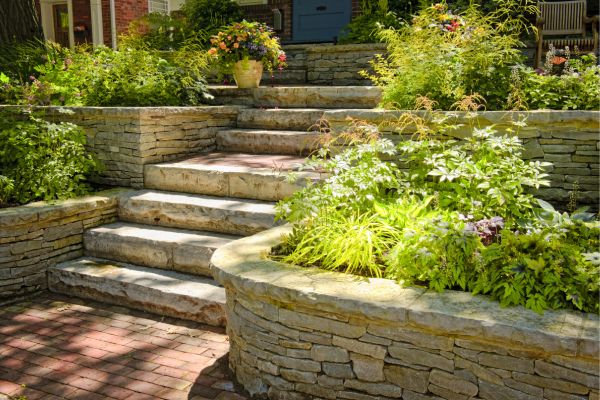
Retaining walls are an essential example of hardscape. These structures solve grading issues and can create flat terraces to make the most of your yard. They also play a key role in preventing erosion. There are many design options for these walls, with features ranging from built-in seating to raised planters and beyond.
Fire pits and outdoor fireplaces are welcome additions to any hardscape design. From simple wood-burning fire pits to convenient gas models, they can extend the seasonal use of your outdoor spaces. A fire pit is also an inviting focal point for social gatherings.
You can further enhance your yard with options like outdoor kitchens and bar islands. These fixtures can feature countertops, sinks, storage, and even built-in grills. The combination of convenience and luxury can allow you to transform your outdoor spaces into a complete entertaining hub.
Choosing the Right Hardscaping Materials
In addition to choosing the specific features you want, you’ll also need to carefully consider materials. The materials you choose impact the style, quality, and longevity of your hardscape. Making the right choice requires carefully considering your needs, wants, and budget.
What is hardscape design’s most popular material options? When it comes to patios and walkways, interlocking concrete pavers are always a safe bet. They feature exceptional strength, versatility, and repairability and can resist cracking. You can also easily replace individual pieces as needed for long-term maintenance. The countless styles, shapes, and colors make them ideal to suit any outdoor space.
Many homeowners opt for brick in their hardscape designs. It provides a traditional style and welcoming warmth. You can incorporate brick into patios, edging, and accent elements to tie your entire hardscape design together.
Natural stone is at the higher end of hardscape design. It provides a one-of-a-kind beauty that makes any hardscape feature stand out. With unique colors and shapes, your spaces will have an organic and custom feel. Natural stone generally comes at a higher cost, but the added elegance is often more than worth it.
Hardscaping also incorporates different types of ground cover. You can choose from gravel, crushed stone, and even decomposed granite. Varied sizes and colors offer solutions for any style. Drainage requirements also affect the choice of ground cover.
 Planning Your Hardscaping Project
Hardscaping projects vary widely in their style and scope, so it’s best to partner with professionals. There are many factors to consider, from drainage to permits. Relying on the expertise of a dependable hardscaping company simplifies the process at every stage and avoids costly mistakes.
An initial consultation sets the groundwork for your project. You’ll discuss what you want to achieve with your hardscaping in terms of style and function. Accurate measurements ensure that the design aligns with your property’s layout. Professionals evaluate key details, including grading, existing structures, drainage, and sunlight exposure.
The professionals will then prepare a hardscape design based on your input and site details. The design lays out all the details in terms of specific features, styles, and materials. There may be some back and forth before landing on a finalized design.
Once you choose a design, you’ll receive a quote that outlines material costs, labor, and timeline. Make sure to analyze the quote carefully. Ask any questions you might have about the timeline and budget. A little scrutiny here can save you from unexpected surprises later on.
Before construction begins, the company will secure necessary permits. This is essential to prevent complications and can involve multiple parties, including local inspectors, utility companies, and the municipality. Going with a local company ensures that everything aligns with the specific codes in your area.
With the permits and planning ready, the company can get to work. Experienced crews will carry out the grading, modifications, and installation to make your hardscape design a reality. Careful attention to detail ensures beautiful and lasting results, leaving your property with a permanent improvement.
Maintaining Your Hardscape
What does hardscape mean for your property in the long run? While hardscape elements are durable and long-lasting, there are some maintenance requirements. Cleaning is a crucial step. Sweeping away dirt, leaves, and debris will help prevent stains and damage. Occasional power washing can remove stains and restore surfaces.
For patios and walkways, maintaining joints between pavers is also important. Rain and foot traffic can erode joint sand over time, so reapplying sand when gaps appear will help keep pavers locked in place. This also deters weeds and can prevent water from penetrating and weakening the base underneath.
Weeds are another concern when it comes to hardscaping. While proper jointing goes a long way in preventing weeds, they can still take hold in cracks and along edges. Simply removing weeds by hand is often enough. If you face ongoing weed issues, there are many different treatments to tackle them.
In Illinois, you’ll also have to consider proper winter care. When clearing patios and walkways of snow, use a plastic shovel to avoid scratches. You should clear the snow promptly to prevent ice buildup. Avoid harsh de-icing salts, as they can stain and damage certain materials.
Sealing is a great way to maintain your hardscaping. After a few years, resealing may be necessary. This will help protect against stains and water damage. It’s also an opportunity to revitalize or even change the color or tone of certain materials. Well-maintained pavers and surfaces can last for decades.
Creating Stunning Hardscaping for Your Home in Illinois
Hardscaping represents a low-maintenance, long-lasting way to achieve a beautiful and functional yard. At Environmental Landscapes, our expert team of contractors offers custom hardscape designs tailored to your style and needs. Schedule your free consultation with a trusted landscaping company in Lake Villa today.